
Why green tea may be better than coffee
What if you don't need more stimulation, but a different way to feel awake?
Green tea brings together caffeine, L-theanine and naturally occurring plant compounds.
That combination is precisely what makes green tea different.


One small leaf. A surprisingly interesting chemistry.
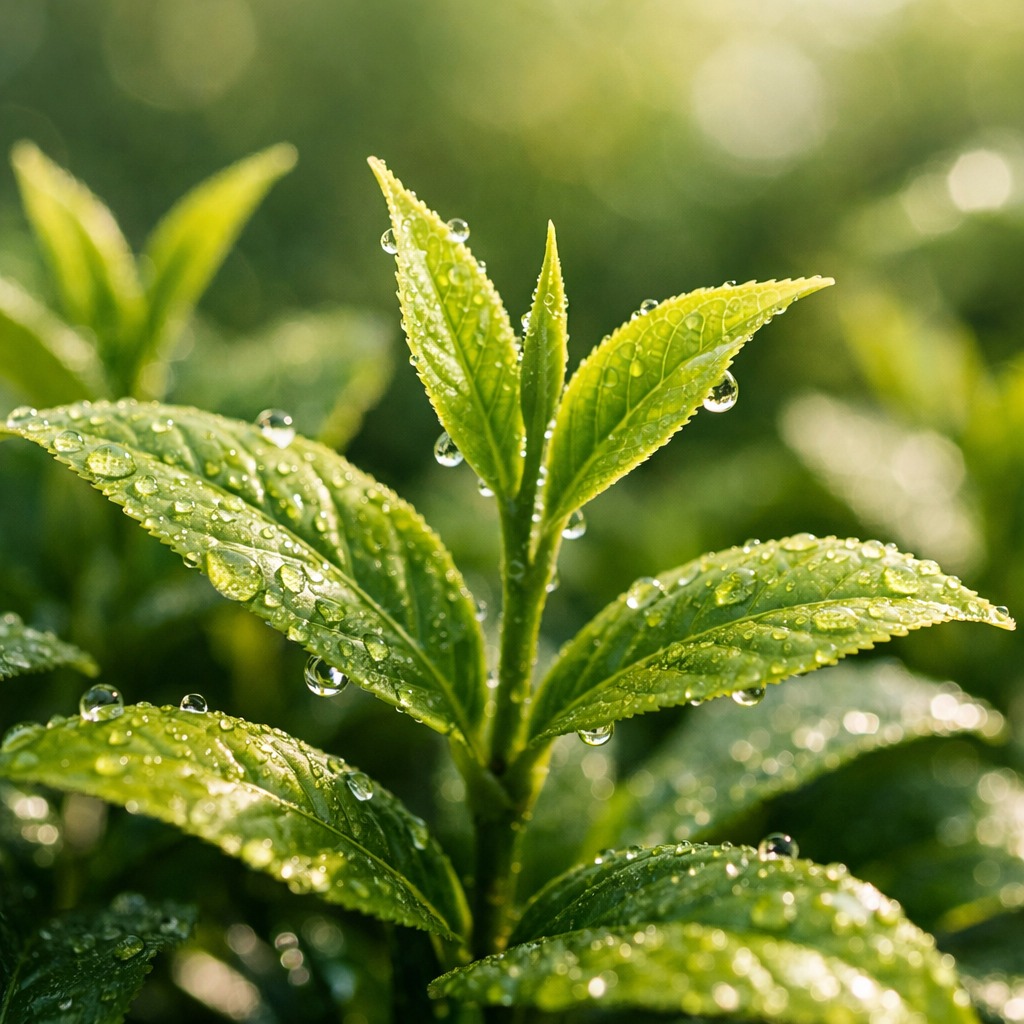
The leaves of Camellia sinensis naturally contain caffeine, L-theanine and catechins.
Alertness
A stimulant that can increase alertness and wakefulness.
Calm + attention
An amino acid characteristic of tea, studied for its relationship with relaxation and attention.
The plant side
Natural polyphenols found in tea, including EGCG, one of the most studied compounds in green tea.
It's not only about how much caffeine.
It also matters what else arrives alongside it.
L-theanine is one reason green tea is particularly interesting. It has been studied in relation to relaxation, attention and cognitive performance.
L-theanine. The most interesting part of tea.
It isn't a stimulant. It doesn't “wake you up.” But it may change how alertness feels.
L-theanine is an amino acid naturally found in tea leaves.

Not more energy. A different feeling of attention.
Recent research suggests that L-theanine may influence certain measures of attention, although results are not identical across studies.
Relaxation
It has been studied for its relationship with relaxation without necessarily causing drowsiness.
Attention
Some trials have found improvements in specific attention-related tasks.
Caffeine + L-theanine
The combination has shown favourable effects on some measures of attention and cognitive performance.
Calm and focus don't have to be opposites.
Maybe the goal isn't to feel more, but to feel more present.
Current evidence points to possible benefits of L-theanine on certain aspects of attention, particularly when combined with caffeine, although results vary across studies and doses.
Not all green tea is the same.
The same plant can create very different experiences.
Cultivar, growing conditions, shading, harvest and preparation can all influence its composition and sensory profile.

Four teas. Four different personalities.
Matcha, Sencha, Gyokuro and Hojicha all belong to the world of green tea, but cultivation and processing create very different profiles.
Intense
A powdered green tea made from shaded leaves. Because you consume the whole leaf, its composition can be more concentrated.
Fresh
One of Japan's most common green teas, typically prepared by infusing the leaves.
Umami
A tea shaded before harvest and associated with relatively high levels of L-theanine.
Roasted
Roasted green tea known for its warm, mellow and deeply toasted aroma.
There isn't one “perfect” green tea.
The interesting part is choosing what you want from the cup.
If you want a more intense experience, matcha can feel very different from a lighter Sencha. If you prefer a deeper umami profile, Gyokuro offers another expression of the same plant.
Green tea
vs coffee.
Green tea
A combination of caffeine, L-theanine and tea polyphenols creates a more complex profile than caffeine alone.
Coffee
Coffee is primarily valued for its caffeine-driven stimulating effect, making it a familiar choice when you want a stronger sense of activation.
So does L-theanine
“cancel out” caffeine?
Not exactly. L-theanine does not remove caffeine or switch off its stimulant action. Research suggests that taking the two together may support attention and some aspects of cognitive performance, while the experience of stimulation may feel different. The evidence is promising, but not every study finds the same effect.
The interesting difference isn't simply “less caffeine”. It's the combination: caffeine for alertness, L-theanine for a potentially calmer cognitive state, and the ritual of tea itself.
ชาเขียว
vs กาแฟ
Green tea
คาเฟอีน L-theanine และสารโพลีฟีนอลในชา ทำให้ชาเขียวมีองค์ประกอบที่ซับซ้อนกว่าคาเฟอีนเพียงอย่างเดียว
Coffee
กาแฟมีคาเฟอีนเป็นองค์ประกอบหลักที่ทำให้เกิดความตื่นตัว จึงเป็นตัวเลือกที่คุ้นเคยเมื่อต้องการความกระตุ้น
L-theanine
“ลบฤทธิ์” คาเฟอีนไหม?
ไม่ได้ลบฤทธิ์คาเฟอีนโดยตรง งานวิจัยบางส่วนพบว่าการได้รับทั้งสองอย่างร่วมกันอาจช่วยด้านสมาธิและการทำงานบางอย่างของสมอง ขณะที่ประสบการณ์ของความตื่นตัวอาจแตกต่างออกไป แต่หลักฐานยังไม่สม่ำเสมอในทุกการศึกษา
ความน่าสนใจไม่ได้อยู่ที่ “คาเฟอีนน้อยกว่า” เพียงอย่างเดียว แต่อยู่ที่ การทำงานร่วมกันขององค์ประกอบ และประสบการณ์ของชา
Té verde
vs café.
Green tea
La combinación de cafeína, L-teanina y polifenoles del té crea un perfil más complejo que la cafeína por sí sola.
Coffee
El café destaca principalmente por su efecto estimulante asociado a la cafeína, por lo que suele producir una sensación de activación más marcada.
¿La L-teanina
“anula” la cafeína?
No exactamente. La L-teanina no elimina la cafeína ni apaga su acción estimulante. Algunos estudios sugieren que combinarlas puede favorecer la atención y determinadas tareas cognitivas, aunque los resultados no son uniformes en todos los estudios.
La diferencia interesante no es simplemente “menos cafeína”. Es la combinación: cafeína para la alerta, L-teanina para un posible estado cognitivo más sereno y el propio ritual del té.
Green tea + Shilajit.
Two ancient ingredients with very different profiles. Green tea provides caffeine, L-theanine and catechins, while Shilajit contains Fulvic acid, Humic acid and other bioactive compounds. Together, they can create a complementary ritual for a more intentional approach to daily energy.
Alertness + focus
Caffeine and L-theanine have been studied in relation to attention and cognitive performance.
Minerals + bioactive compounds
Fulvic acid, Humic acid and other organic compounds that complement a balanced daily ritual.
A mindful combination
A simple way to turn your first drink of the day into a more intentional wellness ritual.
One important note: the specific combination of green tea and Shilajit has not yet been clinically studied as a synergy, so we describe this as complementary rather than a proven amplified effect.

Shilajit Pure Himalayan Resin 10g
1 Month Supply
38,00

Shilajit Pure Himalayan Resin 20g
2 Month Supply
68,33

THE FULL RESET 20g x 2
4 Month Supply
115,00
Choose purified, lab-tested Shilajit for greater transparency around quality and composition.
Make it a ritual.
Not a rush.
Choose your moment
Morning or early afternoon often works well if you want the alertness of caffeine without making it part of your late-day routine.
Keep it simple
Good tea doesn't need much. Water, the leaves and a few intentional minutes are enough.
Drink with attention
Notice the aroma, temperature and taste. The pause itself can turn a stimulant into a more mindful daily ritual.
When is the
right time?
There isn't one universal answer. Your caffeine sensitivity, serving size and the type of tea all matter. For many people, earlier in the day is the simplest approach. If caffeine affects your sleep, avoid making green tea a late-evening habit.
Calm focus is not about doing more.
It's about being more present for what you're already doing. Green tea brings together caffeine, L-theanine, plant compounds and ritual in one remarkably simple cup. No complicated protocol. Just a better pause in the day.
Can I drink green tea every day?
For most healthy adults, moderate green tea consumption can fit into a normal diet. Individual caffeine sensitivity and total daily caffeine intake should still be considered.
Is matcha stronger than regular green tea?
Matcha is powdered whole tea leaf, so you consume the leaf rather than only an infusion. Its caffeine and other compounds can therefore be more concentrated, although amounts vary.
Can I have green tea and coffee on the same day?
Yes, but remember that their caffeine contributes to your total daily intake. The effect depends on the serving, timing and your individual sensitivity.
เปลี่ยนให้เป็น
ritual ไม่ใช่ความเร่งรีบ
เลือกช่วงเวลา
ช่วงเช้าหรือช่วงต้นของบ่ายเหมาะสำหรับคนที่ต้องการความตื่นตัว โดยไม่ทำให้คาเฟอีนกลายเป็นส่วนหนึ่งของช่วงค่ำ
เรียบง่ายเข้าไว้
ชาดี ๆ ไม่จำเป็นต้องมีอะไรซับซ้อน น้ำ ใบชา และเวลาไม่กี่นาทีก็เพียงพอ
ดื่มอย่างมีสติ
สังเกตกลิ่น อุณหภูมิ และรสชาติ ช่วงเวลาสั้น ๆ นี้สามารถกลายเป็น ritual ที่ช่วยให้คุณหยุดพัก
เวลาไหน
เหมาะที่สุด?
ไม่มีคำตอบเดียวสำหรับทุกคน ความไวต่อคาเฟอีน ปริมาณ และชนิดของชาล้วนมีผล สำหรับหลายคน การดื่มในช่วงต้นวันเป็นวิธีที่ง่ายที่สุด และหากคาเฟอีนรบกวนการนอน ควรหลีกเลี่ยงชาเขียวช่วงค่ำ
Calm focus ไม่ได้หมายถึงการทำให้มากขึ้น
แต่อาจหมายถึงการอยู่กับสิ่งที่กำลังทำได้มากขึ้น ชาเขียวรวมคาเฟอีน L-theanine สารจากพืช และ ritual ไว้ในถ้วยเดียว เรียบง่าย แต่สามารถเปลี่ยนช่วงพักเล็ก ๆ ของวันได้
ดื่มชาเขียวทุกวันได้ไหม?
สำหรับผู้ใหญ่ที่มีสุขภาพทั่วไป การดื่มชาเขียวในปริมาณพอเหมาะสามารถเป็นส่วนหนึ่งของอาหารประจำวันได้ แต่ควรคำนึงถึงความไวต่อคาเฟอีนและคาเฟอีนรวมตลอดวัน
Matcha เข้มข้นกว่าชาเขียวทั่วไปไหม?
Matcha เป็นใบชาที่บดเป็นผงและรับประทานทั้งใบ จึงอาจได้รับสารจากใบชาในปริมาณที่เข้มข้นกว่า แต่ปริมาณจริงแตกต่างกันตามผลิตภัณฑ์และวิธีเตรียม
ดื่มชาเขียวและกาแฟในวันเดียวกันได้ไหม?
ได้ แต่ควรนับคาเฟอีนจากทั้งสองอย่างรวมกัน ปริมาณและช่วงเวลาที่ดื่ม รวมถึงความไวต่อคาเฟอีนของแต่ละคน มีผลต่อประสบการณ์ที่ได้รับ
Hazlo un ritual.
No una carrera.
Elige tu momento
La mañana o las primeras horas de la tarde suelen funcionar bien si buscas los efectos de la cafeína sin convertirla en parte de tu rutina nocturna.
Mantenlo sencillo
Un buen té no necesita demasiado. Agua, hojas y unos minutos de intención pueden ser suficientes.
Bébelo con atención
Observa el aroma, la temperatura y el sabor. La propia pausa puede convertir el estimulante en un ritual más consciente.
¿Cuál es
el mejor momento?
No existe una respuesta universal. Tu sensibilidad a la cafeína, la cantidad y el tipo de té importan. Para muchas personas, tomarlo durante las primeras horas del día es lo más sencillo. Si la cafeína afecta a tu sueño, evita convertirlo en un hábito nocturno.
El foco sereno no consiste en hacer más.
Consiste en estar más presente en lo que ya estás haciendo. El té verde reúne cafeína, L-teanina, compuestos vegetales y ritual en una sola taza. Sin protocolos complicados. Solo una mejor pausa dentro del día.
¿Puedo tomar té verde todos los días?
Para la mayoría de adultos sanos, un consumo moderado puede formar parte de una dieta normal. Aun así, conviene considerar la sensibilidad individual a la cafeína y el consumo total diario.
¿El matcha es más fuerte que el té verde normal?
El matcha es hoja de té molida, por lo que consumes la hoja completa en lugar de solo una infusión. Por ello puede aportar una mayor concentración de determinados compuestos, aunque depende del producto.
¿Puedo tomar té verde y café el mismo día?
Sí, pero recuerda que la cafeína de ambos contribuye a tu consumo total diario. La cantidad, el momento y tu sensibilidad individual son importantes.